
Quick answer: Hurricane insurance claims are usually delayed or underpaid because of incomplete documentation, disputes over what caused the damage, missing repair scope, multiple overlapping policies, inspection backlogs, or confusion about the hurricane deductible. Strong documentation and, when needed, professional insurance claim assistance can help homeowners respond effectively and move the claim forward.
This guide answers the questions South Florida homeowners ask most often after a hurricane — covering Miami-Dade, Broward, Palm Beach, Lee, Collier, Charlotte, Sarasota, and Manatee counties — where wind, storm surge, and heavy rain routinely produce complicated property damage claims. A delayed or underpaid claim doesn’t always mean a denial. It usually means something in the claim file needs a closer look.

What Does It Mean When a Claim Is “Delayed” vs. “Underpaid”?
A delayed claim is one where the insurance company hasn’t yet made a coverage or payment decision — often because of missing information, high claim volume, or an unresolved dispute over the cause of loss. An underpaid claim is one where a payment has already been issued, but the amount isn’t enough to fully repair the covered damage. The two problems often overlap on hurricane claims, since incomplete documentation can cause both a delay and a low initial estimate.

Why Is My Hurricane Insurance Claim Taking So Long?
After a major storm, insurers can receive thousands of claims within days, which naturally slows inspections and communication. But volume isn’t the only reason a claim stalls — most delays trace back to one of three issues below.
Why Is My Claim Delayed Due to Incomplete Documentation?
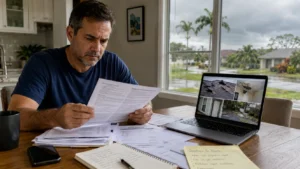
A claim slows down when the insurer doesn’t have enough evidence to understand what happened and when. Insurers typically want to see:
- Photos and videos of the damage
- Date of loss and a description of the event
- Emergency repair invoices and contractor estimates
- Roof inspection reports and water mitigation records
- A personal property inventory
- Receipts for temporary repairs
- A record of communications with the insurer
Key insight: the more organized the documentation, the faster the insurer can act on the property damage insurance claim.
Why Do Insurance Companies Dispute the Cause of Hurricane Damage?
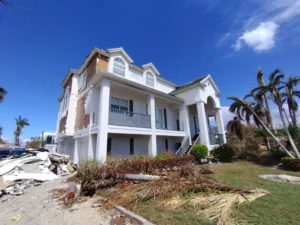
Insurers investigate the cause of loss because a single hurricane can produce both wind damage and water damage — and Florida policies often treat them differently. The carrier may be trying to determine whether the damage came from:
- Hurricane winds or wind-driven rain
- Flooding or storm surge
- Pre-existing roof wear or poor maintenance
- Long-term leaks or installation issues
- Mold or moisture that developed gradually, rather than during the storm
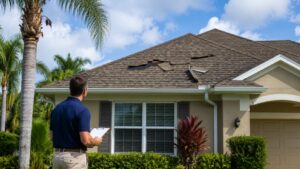
For example, if rain entered through a damaged roof, the homeowner may see it as hurricane-related, while the insurer investigates whether the opening was caused by the storm or by age and prior deterioration. A hurricane claims adjuster can review damage patterns, photos, and repair estimates to help present the claim more clearly.
Why Do Multiple Insurance Policies Complicate a Hurricane Claim?
Because hurricane damage can trigger more than one policy at once — and each policy has its own deductible, exclusions, and documentation requirements. Depending on the property, a homeowner may need to coordinate:
- Homeowners insurance
- Windstorm insurance
- Flood insurance (NFIP or private, plus excess flood coverage)
- Condo or HOA master policy
- Commercial property or landlord/investment-property coverage
This is one of the main reasons professional insurance claim assistance is valuable when damage is extensive or spans wind, water, and structural issues at once.

Why Was My Property Damage Insurance Claim Underpaid?
An underpaid claim means the insurer issued a payment, but it falls short of what’s needed to fully repair the covered damage. This typically happens for one of four reasons.
Why Does the Insurance Estimate Miss Hidden Damage?
Because storm damage isn’t always visible during the first inspection. Damage commonly overlooked at the initial walkthrough includes:
- Moisture trapped behind walls
- Roof decking or underlayment damage
- Insulation and flooring damage beneath the surface
- Electrical issues from water intrusion
- Structural movement or mold-related concerns
- Damaged exterior components
A public insurance adjuster can document damage from the policyholder’s perspective and compare that documentation against the insurer’s estimate to catch what was missed.
Why Is the Repair Scope in My Estimate Too Limited?
Because the estimate may cover some repairs while leaving out related, necessary work. A roof estimate might address a small repair area but skip surrounding damage; a ceiling estimate might include paint but not the drywall, insulation, or water mitigation behind it. A complete scope typically needs to account for:
- Labor, materials, and disposal
- Taxes and permit requirements
- Matching issues and code-required upgrades (when covered)
- Drying, remediation, and structural repairs
- Personal property replacement
Why Have Hurricane Repair Costs Increased Since My Estimate Was Written?
Because demand for contractors, roofers, and building materials spikes immediately after a storm. South Florida homeowners often face higher labor costs, material shortages, longer timelines, emergency service fees, and permit delays in the weeks after a hurricane. If the insurer’s estimate uses outdated or incomplete pricing, the settlement can fall short of real-world repair costs — which is why it’s worth comparing the carrier’s estimate against current, qualified contractor bids.
Why Is My Hurricane Deductible Higher Than I Expected?
Because Florida hurricane deductibles are usually calculated as a percentage of the home’s insured value, not a flat dollar amount like a standard deductible. For example, a 2% hurricane deductible on a $500,000 insured property equals $10,000 out of pocket. This doesn’t necessarily mean the claim was underpaid, but it can make the final check feel much smaller than expected. A licensed public adjuster in Florida can walk through the claim documents and confirm how the deductible was applied.

How Does a Public Adjuster Review a Delayed or Underpaid Claim?
A public adjuster or hurricane claims adjuster reviews the full claim file — the policy, the carrier’s estimate, the payment or denial letter, photos, contractor estimates, mitigation invoices, roof reports, and any communications with the insurer — to identify what’s missing, unclear, or disputed. The review generally follows five steps:
- Review the policy to understand coverage, exclusions, deductibles, and duties after loss.
- Compare estimates — the insurer’s estimate against contractor estimates and the visible damage, to spot missing scope or pricing gaps.
- Identify missing documentation, such as photos, receipts, or mitigation records that still need to be gathered.
- Clarify the cause of loss if the insurer is questioning whether the storm caused the damage.
- Communicate clearly and factually with the insurance company, avoiding guesses about the cause of damage.

What Mistakes Can Weaken a Property Damage Insurance Claim?
Not every delay or underpayment is the insurer’s doing — homeowners sometimes unintentionally make their own claim harder to prove. Here are the most common mistakes.
Does Waiting Too Long to Report Damage Hurt My Claim?
Yes. Most policies require prompt notice of loss. Waiting too long can raise questions about when the damage actually occurred and whether additional damage developed afterward.
Should I Take Photos Before Cleaning Up Storm Damage?
Yes, whenever it’s safe to do so. Safety comes first, but photos and videos taken before cleanup often become the most important evidence in the claim.
Can I Throw Away Damaged Materials Before the Adjuster Sees Them?
It’s best not to, if avoidable. Damaged flooring, drywall, furniture, or roofing materials may need to be inspected. If items must be removed for safety or health reasons, take detailed photos first.
Should I Make Permanent Repairs Before the Claim Is Inspected?
No — temporary repairs to prevent further damage are appropriate, but permanent repairs made too early can make it harder to prove the property’s original condition.
Should I Accept the Insurance Company’s First Estimate?
Not without reviewing it first. The first estimate may not include all of the damage, so it’s worth comparing it against contractor bids and your own documentation before assuming the payment is complete.
Why Should I Keep a Communication Log With My Insurer?
Because a written log of every call, email, inspection, and submitted document helps track the claim timeline and can become important if the claim is disputed later.
What’s the Difference Between the Insurance Company’s Adjuster and a Public Adjuster?
The insurance company’s adjuster works for the carrier. A public insurance adjuster is hired by — and works exclusively for — the policyholder, helping document damage and present the claim. Confusing the two is a common reason homeowners feel blindsided by a low offer.

When Should I Hire a Public Adjuster in Florida?
Not every hurricane claim needs professional help — small, straightforward claims can often be handled directly with the insurer. Consider seeking insurance claim assistance when:
- The claim has been delayed without a clear explanation
- The payment seems too low for the damage
- The damage is extensive or affects both wind and water
- The insurer disputes the cause of loss or denies part of the claim
- Multiple policies may apply to the same loss
- A contractor’s estimate is significantly higher than the insurer’s
- The insurer keeps requesting additional documentation
- You don’t fully understand the claim paperwork

Frequently Asked Questions
Why is my hurricane insurance claim taking so long?
High claim volume, missing documentation, inspection backlogs, cause-of-loss disputes, and requests for additional information are the most common causes. Keeping a written record of all communication and submitting requested documents promptly can help move things along.
What should I do if my property damage insurance claim is underpaid?
Review the insurance estimate line by line and compare it against contractor estimates, photos, and the actual damage. If key items are missing, professional insurance claim assistance can help document the loss more completely.
Can a hurricane claims adjuster help with a denied or underpaid claim?
Yes. A hurricane claims adjuster or licensed public adjuster can review the damage, policy, estimate, and claim file to identify missing damage, prepare supporting documentation, and communicate with the insurance company on the homeowner’s behalf.
What is the difference between an insurance company adjuster and a public adjuster?
An insurance company adjuster evaluates the claim for the carrier’s interests. A public adjuster represents the policyholder and helps document and present the property damage claim to maximize a fair outcome.
Can I reopen a hurricane claim if more damage is found later?
In some cases, yes — supplemental claim documentation can be submitted if additional damage is discovered. Florida generally allows a limited window to reopen or supplement a claim, so policy terms and timing should be reviewed carefully as soon as new damage is found.
When should I contact a public adjuster in Florida?
Consider contacting one when the damage is significant, the claim is delayed, the payment seems too low, the insurer disputes the cause of loss, or you’re unsure how to properly document the claim.
How much does a public adjuster cost?
Public adjusters generally work on contingency, charging a percentage of the claim settlement rather than an upfront fee — so they’re only paid if the homeowner is paid. Exact percentages and fee structures should always be confirmed in a written contract before signing.
Is it worth hiring a public adjuster for a hurricane claim?
It depends on the size and complexity of the damage. For extensive, disputed, or multi-policy hurricane claims, a public adjuster’s documentation and negotiation experience can help ensure the full scope of damage is captured — which is often harder to do without professional support.

Get Help With a Delayed or Underpaid Hurricane Insurance Claim
Hurricane damage can leave South Florida homeowners dealing with roof repairs, water intrusion, damaged interiors, contractor estimates, and confusing insurance paperwork. If your claim is delayed, denied, underpaid, or difficult to understand, you don’t have to navigate the process alone.
The HomeOwner’s Advocate provides insurance claim assistance for homeowners and property owners dealing with hurricane-related losses throughout South Florida. Our team can review the circumstances of the loss, help document the damage, and assist with presenting your claim to the insurance company.
If your property damage insurance claim has been delayed or underpaid, contact The HomeOwner’s Advocate to discuss your next steps.
Coverage depends on the individual policy and facts of the loss. This article provides general educational information and is not legal advice or a guarantee of insurance coverage.