
Introduction: When Minor Storm Damage May Be More Than It Looks
After a Florida hurricane or severe windstorm, not every home has obvious catastrophic damage. You may notice only a few missing shingles, a small ceiling stain, loose siding, damaged gutters, or debris impact around the property. That raises an important question: Is the damage significant enough to report to your insurance company?
Before deciding the loss is too minor to matter, consider having it properly evaluated. A hurricane claims adjuster or other qualified professional may identify damage that isn’t immediately visible from the ground or inside your home.
This is particularly important for homeowners throughout Florida, where tropical systems can bring high winds and wind-driven rain to communities from Miami and Fort Lauderdale to Bradenton, Sarasota, Tampa, Fort Myers, Pensacola, Panama City and Jacksonville.
Florida also has specific rules governing hurricane deductibles. As a result, homeowners shouldn’t make a claim decision based solely on whether the visible repair cost appears lower than the deductible.
Quick Answer: Should You Report Minor Hurricane Damage in Florida?
If your home has covered wind damage from a hurricane, Florida consumer guidance recommends reporting the loss even when the estimated repairs appear to be less than your hurricane deductible.
Why? Florida’s hurricane deductible is generally cumulative for covered hurricane losses during the calendar year when you remain with the same insurer or insurer group. Reporting the first loss creates a record of the amount that may count toward that deductible if another hurricane causes damage later that year.
Hidden damage may also become apparent once repairs begin.
The best approach is to document the damage, review your policy and deductible, and determine the actual scope of the loss before assuming it is too minor to report.
Why Minor Hurricane and Wind Damage Can Be Misleading
A storm does not have to remove an entire roof to cause a significant problem.
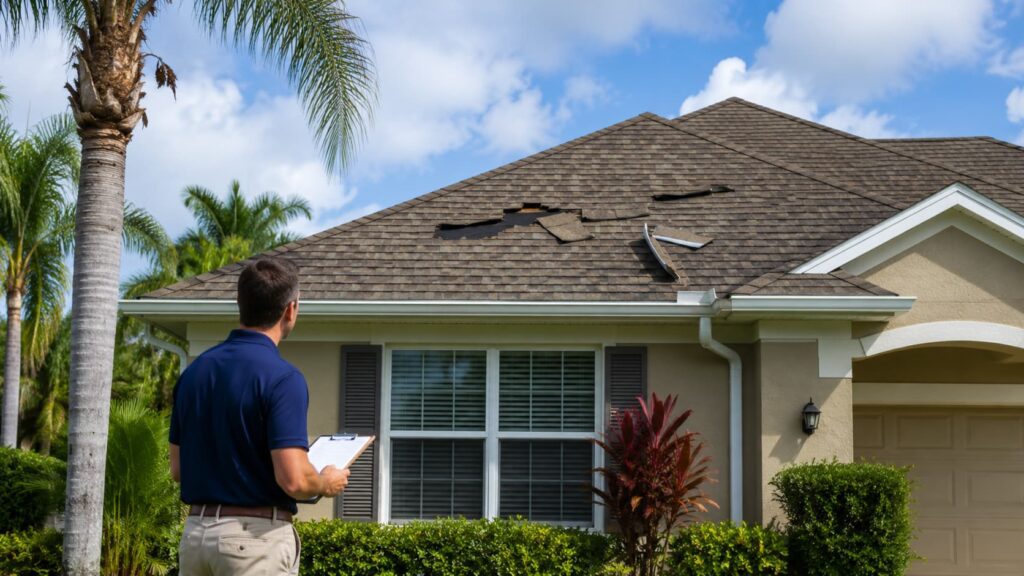
Roof Damage Isn’t Always Visible From the Ground
Strong winds may loosen or displace roofing materials without completely removing them. Flashing, vents, roof edges and other components can also be affected.
Once the building envelope is compromised, rain can potentially enter the structure.
The first interior symptom may be nothing more than a small stain.
However, moisture may have reached:
- Roof decking
- Attic insulation
- Drywall
- Ceiling materials
- Wall cavities
- Interior finishes
Florida’s warm, humid conditions make investigating moisture intrusion particularly important.
Small Exterior Problems Can Affect Multiple Areas
Wind damage can also involve:
- Soffits and fascia
- Gutters
- Siding
- Windows and doors
- Screens and enclosures
- Fences
- Detached structures
- Exterior finishes
Visible damage and the full repair scope aren’t always the same thing.
That is why estimating a property damage insurance claim based only on a quick walk around the home can be misleading.
What a Hurricane Claims Adjuster Looks for After a Storm
A hurricane claims adjuster evaluates the reported loss to determine the nature and extent of storm-related damage.
Depending on the circumstances, the inspection may involve more than looking for missing shingles.
Exterior and Roof Conditions
An inspection may look for:
- Missing or displaced roofing materials
- Damaged flashing
- Wind-created openings
- Debris impact
- Damaged exterior components
- Potential points of water entry
Interior Signs of Damage
Inside the home, relevant conditions may include:
- Ceiling stains
- Damp drywall
- Peeling paint
- Warped flooring
- Moisture near windows or doors
- Attic moisture
- Musty odors
A homeowner may initially see what looks like a $1,000 repair while a more thorough inspection reveals additional affected materials.
That doesn’t mean every small storm loss will become a major insurance claim. It means the extent of the loss should be understood before making that assumption.
How Florida’s Hurricane Deductible Affects Minor Claims
Florida’s hurricane deductible is one of the biggest reasons homeowners should think carefully before dismissing minor hurricane damage.
Unlike a typical flat deductible, hurricane deductibles are commonly calculated as a percentage of the home’s insured dwelling limit.
Example: A 2% Hurricane Deductible
Imagine your Florida home has:
Dwelling coverage: $400,000
Hurricane deductible: 2%
Dollar deductible: $8,000
After the first hurricane of the year, you discover $3,000 in covered wind damage.
At first glance, you might think:
“Why report a $3,000 loss if my deductible is $8,000?”
But Florida’s hurricane deductible generally operates on a calendar-year basis for covered hurricane losses when the homeowner remains insured by the same company or insurance group.
If another hurricane causes covered damage later in the same calendar year, the amount applied toward the first hurricane deductible can matter.
What Happens If Another Hurricane Hits?
Using the same example, suppose a second hurricane causes considerably more damage later in the year.
The deductible for that subsequent covered hurricane loss may account for the amount already applied toward the annual hurricane deductible, subject to the policy and Florida rules.
This is why Florida consumer guidance specifically recommends reporting covered hurricane damage even when repair costs initially appear lower than the hurricane deductible.
A high deductible does not automatically mean hurricane damage should go unreported.
Hurricane Damage vs. Other Wind Damage in Florida
Another common source of confusion is assuming every wind-damage claim uses the hurricane deductible.
It doesn’t.
Florida defines a specific period during which hurricane coverage and the hurricane deductible apply. That period begins when the National Hurricane Center issues a hurricane warning for any part of Florida and continues until 72 hours after the termination of the last hurricane watch or warning for any part of the state.
Wind damage outside that period may fall under different policy provisions and deductibles.
This distinction is another reason to review:
- The date of loss
- The storm involved
- Your declarations page
- Your applicable deductibles
- Your wind and hurricane coverage
An insurance adjuster or insurance claims adjuster assigned by the carrier investigates the loss for the insurance company.
A licensed public insurance adjuster, by contrast, is hired by the policyholder and represents the homeowner’s interests during the property insurance claim.
What Should You Do After Discovering Minor Storm Damage?
If you notice potential wind or hurricane damage, taking a few organized steps can protect your ability to evaluate the loss properly.
1. Document What You See
Take photographs and videos as soon as it is safe.
Document:
- Visible roof damage from ground level
- Exterior walls and siding
- Gutters and soffits
- Windows and doors
- Ceiling or wall stains
- Flooring
- Damaged personal property
- Fences and exterior structures
Take both wide shots and close-ups.
Never climb onto a wet or storm-damaged roof simply to obtain photographs.
2. Record When You Discovered the Damage
Note the date you first noticed the problem and the storm associated with it.
Stick to what you know rather than guessing about technical causes.
3. Prevent Additional Damage
Florida homeowners have a responsibility to take reasonable steps to protect their property from additional damage after a loss.
Temporary measures may include emergency roof protection or water mitigation when appropriate.
Photograph the affected area before temporary repairs whenever safely possible, and save invoices and receipts.
4. Review Your Insurance Policy
Look at your declarations page and relevant policy provisions for:
- Hurricane deductible
- All-other-perils deductible
- Windstorm coverage
- Dwelling coverage
- Roof provisions
- Water-damage provisions
- Exclusions and endorsements
Do not assume the same deductible applies to every type of wind event.
5. Get Professional Insurance Claim Assistance When Needed
If you cannot determine whether the damage is isolated or more extensive, consider obtaining professional assistance.
A licensed public claims adjuster can review the loss from the policyholder’s perspective, help document covered property damage, review the insurer’s assessment, and explain the claims process.
Insurance Adjuster vs. Public Insurance Adjuster: Who Represents You?
This distinction is especially important when homeowners search online for terms such as “claim adjuster” or “public adjuster near me.”
Insurance Company Adjuster
An insurance-company claim adjuster evaluates the loss on behalf of the carrier.
Their role generally includes investigating:
- What happened
- Whether the loss is covered
- What property was damaged
- The estimated scope and cost of covered repairs
Public Insurance Adjuster
A public insurance adjuster represents the policyholder rather than the insurance company.
Depending on the claim, a public adjuster may assist with:
- Reviewing policy coverage
- Inspecting and documenting damage
- Preparing a detailed scope of loss
- Reviewing insurer estimates
- Identifying potentially overlooked damage
- Communicating with the carrier
- Preparing appropriate supplemental documentation
- Negotiating the property portion of the claim
If you’re considering a public adjuster in Florida, verify that the individual is properly licensed and has experience with your type of loss.
For homeowners specifically looking for a public adjuster in Bradenton, FL, experience with hurricane, wind and water-related property claims can be particularly valuable because of the Gulf Coast’s exposure to tropical weather.
Benefits of Evaluating Minor Damage Early
Taking minor storm damage seriously does not mean assuming you have a major claim.
It means gathering enough information to make an informed decision.
An early evaluation can help you:
- Establish when the damage occurred
- Document the property’s post-storm condition
- Identify potentially hidden damage
- Understand which deductible applies
- Preserve receipts and repair records
- Determine whether professional insurance claim assistance is appropriate
It can also reduce the risk of discovering months later that a small visible problem was connected to a larger issue.
The goal isn’t to file unnecessary claims. It’s to avoid making an uninformed decision about legitimate storm damage.
Common Mistakes Florida Homeowners Make With Minor Storm Damage
Mistake #1: Assuming It’s Too Small to Report
For hurricane losses specifically, Florida’s calendar-year deductible rules make this assumption potentially problematic.
Mistake #2: Waiting for a Small Leak to Become Serious
A ceiling stain or moisture problem should be investigated rather than ignored.
Mistake #3: Making Permanent Repairs Before Documenting Damage
Emergency mitigation may be necessary, but document conditions first whenever safely possible and retain receipts.
Mistake #4: Assuming Every Wind Loss Uses the Hurricane Deductible
The applicable deductible depends on the type and timing of the event and the policy.
Mistake #5: Throwing Away Damaged Materials Too Quickly
Preserve damaged property when practical until the insurer has had an opportunity to inspect it or provides instructions regarding disposal.
Mistake #6: Waiting Too Long to Report Damage
Under current Florida rules, initial and reopened property damage claims generally must be reported within one year after the date of loss, while supplemental claims generally must be reported within 18 months.
Those are deadlines — not recommended waiting periods. Prompt notice is generally the safer approach.
FAQ: Hurricane Claims Adjusters and Minor Wind Damage in Florida
Should I report hurricane damage if it’s less than my deductible?
Yes. Florida consumer guidance recommends reporting covered hurricane damage even when the estimated loss is below the hurricane deductible because the deductible is generally cumulative during the calendar year. Reporting also creates a record if hidden damage is later discovered.
What does a hurricane claims adjuster inspect?
Depending on the loss, a hurricane claims adjuster may inspect roofing, exterior components, interior water damage and other areas potentially affected by the hurricane.
Can minor wind damage cause hidden problems?
Yes. Wind may damage roofing or exterior components in ways that allow moisture to enter without immediately creating obvious interior damage.
What is the difference between an insurance adjuster and a public claims adjuster?
An insurance-company adjuster represents the carrier during the claim investigation. A licensed public claims adjuster is retained by and represents the policyholder.
When should I contact a public adjuster in Florida?
Consider professional assistance when the damage is significant or complicated, you are uncertain about the scope of loss, important damage appears to have been omitted, or you need help understanding and presenting the property insurance claim.
How long do I have to report hurricane or wind damage in Florida?
Initial and reopened Florida property damage claims generally must be reported within one year after the date of loss. Supplemental claims generally must be reported within 18 months. Homeowners should report damage promptly rather than waiting for those deadlines.
Not Sure Whether Your Florida Storm Damage Is Really Minor?
A few damaged shingles, loose siding or a small ceiling stain may represent an isolated repair — or they may be the first visible signs of additional storm damage.
The HomeOwner’s Advocate helps Florida homeowners navigate hurricane, wind, water and other property insurance claims.
Our licensed public adjusters work for you, the policyholder — not the insurance company. We can help review the circumstances of your loss, document covered property damage and provide professional insurance claim assistance when you need an advocate on your side.
Whether you’re in Bradenton, Sarasota, Tampa, Southwest Florida, the Panhandle or another Florida community we serve, don’t make an important insurance decision based solely on what you can see from the ground.
Call 800-FAIR-CLAIM to speak with The HomeOwner’s Advocate about your property damage claim.
Do it once. Do it right. Get The HomeOwner’s Advocate on your side.