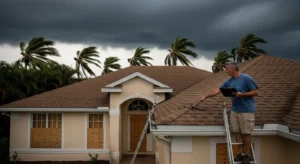

A public adjuster is a licensed insurance professional who works exclusively for policyholders — not insurance companies — to help document, negotiate, and maximize property damage claims. In Florida, where hurricane, flood, and water damage claims are common and complex, hiring a public adjuster can significantly increase your settlement. They are paid a percentage of your final payout only after you are paid, with no upfront cost.
Why Florida Homeowners Are Asking This Question
If you’ve recently filed a homeowners insurance claim and received a denial, a lowball offer, or total silence from your insurer, you’ve probably started searching: what is a public adjuster and whether you actually need one.
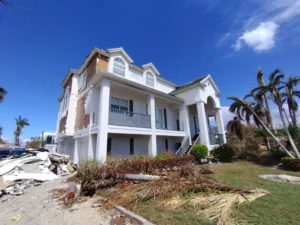
The answer matters — especially in Florida, where residents deal with hurricanes, tropical storms, flooding, mold, and wind damage more than almost anywhere else in the country. Insurance claims in the Sunshine State are notoriously complex, and insurance companies have their own team of adjusters working to minimize what they pay out.
The question isn’t just academic. A study by Florida’s Office of Program Policy Analysis and Government Accountability (OPPAGA) found that policyholders who used a public adjuster received, on average, 747% higher claim payouts than those who filed alone. That number is not a typo.
What Is a Public Adjuster? The Clear Definition
A public adjuster is a state-licensed insurance professional who represents property owners — homeowners, landlords, condo associations, and business owners — in the insurance claim process. Unlike the adjuster sent by your insurance company, a public adjuster’s fiduciary duty is to you, the policyholder.
In Florida, public adjusters are licensed and regulated by the Florida Department of Financial Services (DFS) and must adhere to a strict code of ethics.
The Three Types of Insurance Adjusters in Florida
It’s important to understand who each type works for:
- Insurance Company Adjuster — Works directly for your insurance company. Their primary goal is to protect the insurer’s financial interests.
- Independent Adjuster — Also hired by and paid by the insurance company, even if they appear independent. Their loyalty remains with the insurer.
- Public Adjuster — The only adjuster licensed by the State of Florida to legally represent YOU, the insured. Their job is to maximize your fair settlement.
In short: the insurance company has a professional fighting for their side. A public adjuster ensures you have a professional fighting for yours.
What Does a Public Adjuster Actually Do?
A licensed public adjuster handles every step of the claim process on your behalf, including:
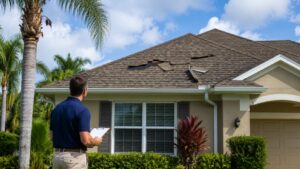
- Thoroughly inspecting and documenting all property damage — including damage you may have missed
- Reviewing your insurance policy in detail to identify every coverage category that applies
- Preparing a comprehensive, professional damage estimate using industry-standard software (such as Xactimate)
- Submitting and managing the claim with your insurance company
- Negotiating directly with the insurer’s adjuster to push for a fair settlement
- Representing you through mediation, appraisal, or arbitration if the insurer disputes the claim
- Vetting contractors and managing the repair process so settlement funds are protected
One of the most overlooked aspects of a public adjuster’s role is contractor vetting. It’s not enough to get a fair settlement — if an unvetted contractor overcharges or underdelivers on repairs, you lose the benefit of that settlement. Reputable firms like The HomeOwner’s Advocate guide clients from claim filing all the way through the restoration process.
Do You Need a Public Adjuster? Signs the Answer Is Yes
Not every insurance claim requires a public adjuster. But there are clear situations where professional representation makes a significant difference:
Your Claim Was Denied
Insurance companies deny valid claims more often than most homeowners realize. A public adjuster can review the denial, identify whether it was improper, and reopen or appeal your claim with the documentation needed to support it.
Your Settlement Offer Seems Too Low
Insurance adjusters work quickly and sometimes miss damage — especially hidden water intrusion, structural issues, or mold that develops after a storm. If the offer doesn’t cover your actual repair costs, a public adjuster will prepare an independent damage estimate and negotiate for a higher, more accurate payout.
Your Loss Exceeds $10,000
As a general guideline: if your property damage exceeds $10,000, you should strongly consider professional representation. The complexity of the policy, the negotiation involved, and the potential underpayment risk all increase significantly with claim size.
Your Claim Involves Hurricane, Flood, or Water Damage
Florida’s most common claim types — hurricane wind, flooding, pipe bursts, and roof damage — are also among the most disputed. Wind vs. flood coverage disputes, the state’s 25% roof damage threshold, and overlapping policy coverage (homeowner’s + flood/FEMA) are all areas where policyholders routinely get underpaid without expert guidance.
You Don’t Have Time to Fight the Process
The insurance claims process is time-consuming, technical, and stressful. A public adjuster handles everything — documentation, communications, negotiations — so you can focus on your family, your business, and rebuilding.
How Much Does a Public Adjuster Cost in Florida?
Public adjusters in Florida work on a contingency basis — meaning you pay nothing upfront and nothing unless you receive a settlement.
Florida law caps public adjuster fees at:
- 20% of the claim settlement for most non-catastrophe claims
- 10% of the claim settlement during the first year following a declared state of emergency (e.g., after a major hurricane)
| Important Because the fee is a percentage of what you receive, a public adjuster is motivated to maximize your payout. The larger your settlement, the more they earn — so their incentives are fully aligned with yours. |
Common Mistakes Homeowners Make Without a Public Adjuster
After handling hundreds of claims across Florida, here are the most costly errors we see homeowners make when filing alone:
- Accepting the first offer without independent verification of the damage estimate
- Missing critical policy coverages like Additional Living Expenses (ALE), Law & Ordinance, or recoverable depreciation
- Failing to document damage thoroughly before cleanup or repairs begin
- Not filing a supplemental claim when additional damage is discovered during repairs
- Hiring unlicensed or unvetted contractors who inflate or misrepresent scope of work
- Missing the deadline to invoke appraisal or file for mediation after a disputed claim
These mistakes can cost tens of thousands of dollars. In several documented Florida cases, homeowners who initially accepted offers under $30,000 received final settlements exceeding $300,000 after professional public adjuster intervention.
Serving Florida Homeowners From Pensacola to Sarasota
Florida’s geography means no two claims are exactly alike. A beachfront property in Pensacola faces different hurricane exposure than a condo association in Panama City. Waterfront homes on Anna Maria Island face flood and wind stacking claims unlike inland properties in Tallahassee. HOA condominium buildings in Pensacola or Port Charlotte have policy structures that require specialized knowledge to navigate.
Whether you’re in the Florida Panhandle, the Gulf Coast, the Space Coast, or anywhere in between, working with a locally experienced public adjuster who knows Florida’s insurance landscape — including state statutes, carrier behaviors, and local building codes — gives you a measurable advantage.
Frequently Asked Questions About Public Adjusters in Florida
Q: What is the difference between a public adjuster and an insurance adjuster?
An insurance adjuster (either staff or independent) works for the insurance company and represents their financial interests. A public adjuster is the only adjuster licensed to represent the policyholder. Their fiduciary duty — a legal obligation to act in your best interest — is entirely to you.
Q: Will my insurance company drop me or raise my rates if I use a public adjuster?
Using a public adjuster does not legally trigger a rate increase or cancellation on its own. Insurance companies can adjust rates or non-renew policies based on claims history, but this is unrelated to whether you used professional representation. In fact, if a storm forces a full roof replacement, your new roof may actually reduce your future premiums.
Q: Can I use a public adjuster if my claim has already been denied?
Yes. A denied claim is one of the strongest reasons to bring in a public adjuster. They can review the denial, assess whether it was improper under your policy, and re-engage the insurer with documentation that supports your right to coverage. Claims that were denied and later reopened with public adjuster involvement have resulted in six-figure settlements.
Q: How do I know if a public adjuster is licensed in Florida?
You can verify a public adjuster’s license through the Florida Department of Financial Services license lookup portal at licenseesearch.fldfs.com. Always confirm a license before signing any contract. Licensed public adjusters in Florida are also required to be bonded and to follow state-regulated fee caps.
Q: What types of property damage does a public adjuster handle?
Public adjusters handle virtually all types of insured property damage, including: hurricane and tropical storm damage, wind and hail damage, roof damage claims, water damage and pipe bursts, flood damage (including FEMA National Flood Insurance claims), fire and smoke damage, mold growth damage, and commercial or HOA community claims.
Q: How long does the claims process take with a public adjuster?
Timelines vary based on claim complexity and carrier responsiveness. A standard residential claim may resolve in 60 to 90 days. Complex commercial claims or post-catastrophe claims during hurricane season can take six to twenty-four months. A reputable public adjuster will keep you informed throughout the process and pursue every available avenue — negotiation, mediation, appraisal, or attorney referral — to reach a fair resolution.
Get a Free Claim Assessment From The HomeOwner’s Advocate
If your insurance company has denied your claim, undervalued your damages, or simply left you feeling uncertain about the process, you deserve professional representation — not guesswork.
The HomeOwner’s Advocate is a licensed and bonded public adjuster serving homeowners and businesses throughout Florida, including Pensacola, Panama City, Tallahassee, Bradenton, Sarasota, Port Charlotte, and more. Founder Jeffrey Von Stein, CPIA, AIC, CRE has over 25 years of commercial real estate and insurance claims experience, and has helped clients recover millions of dollars in previously denied or underpaid settlements.
| No Recovery, No Fee We work on a contingency basis. You pay nothing unless we win your claim. Schedule a FREE, no-obligation claim evaluation today and find out exactly what you may be leaving on the table. |